In August 2026 the will be a Total Solar Eclipse that is visible from Europe. Most of Spain will have a birds-eye view while Portugal and France will see a partial eclipse.
Sometimes, the simplest moments hold the deepest wisdom. Let your thoughts settle, and clarity will find you. Use this quote space to share something inspirational or reflective, perfectly aligned with the theme of your article.
On August 12, 2026, the skies over Europe will play host to one of the most awe-inspiring natural events of the decade—a total solar eclipse. For the first time in more than 27 years, the Moon will completely cover the Sun as seen from mainland Europe, casting a shadow across parts of the continent and plunging select regions into temporary darkness in the middle of the day. Though much of Europe will witness a partial eclipse, northern Spain will offer the most dramatic views, standing directly in the path of totality.
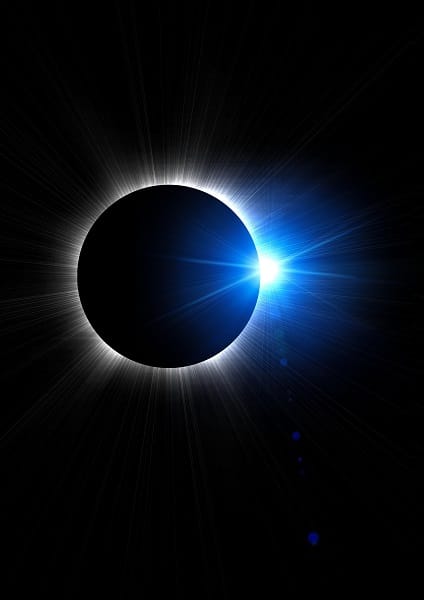
The eclipse’s journey will begin in the far north, sweeping across Arctic Russia, Greenland, and Iceland before heading toward the Iberian Peninsula. As the shadow of the Moon races across the Atlantic, it will make its European landfall over northern Spain, creating the best vantage point on the continent. The event will be visible across Asturias, León, Burgos, Zaragoza, and Valencia, before fading toward the Mediterranean and the Balearic Islands near sunset. In some locations, the total eclipse will last up to 2 minutes and 18 seconds, a breathtaking window that allows observers to see the solar corona and the dramatic “diamond ring” effect as sunlight peeks out from behind the Moon solareclipsespain.com.
In Spain, where the Sun will be low on the horizon during the event, the spectacle will be particularly poignant. From the Atlantic coast at A Coruña (where I will be watching it from, report to follow after the event) to Palma de Mallorca, the horizon will glow faintly as day briefly turns into twilight. Experienced eclipse chasers emphasize the importance of finding a site with an unobstructed view to the west, as the eclipsed Sun will sit low in the evening sky—between 1° and 13° above the horizon depending on location.
According to scientists and tourism experts, the 2026 solar eclipse is shaping up to be a major cultural and economic event for Spain. The Spanish Tourism Board has already identified it as one of the most significant astronomical happenings of the year, expected to draw tens of thousands of visitors eager to experience it firsthand. Hotels, campgrounds, and travel agencies across the northern regions are preparing special eclipse-viewing packages, capitalizing on what promises to be a once-in-a-lifetime gathering of scientists, amateurs, and skywatchers from around the world.Writing this is April 2026, if you have not booked your accomodation yet then you need to be quick and many palces are already fully booked.
Meanwhile, neighboring countries such as Portugal and France will see a partial eclipse. In Portugal, only a small portion of the country’s far northeast—near the Spanish border—will experience a fleeting moment of totality lasting just a few seconds theportugalnews.com. Most Portuguese and French residents, however, will see the Moon take a partial bite out of the Sun, with roughly 40–60% of the solar disc obscured depending on location. Even so, the sight promises to be extraordinary, especially as the event coincides with the Perseid meteor shower, which peaks just a day later.

Astronomers remind the public that safety is paramount when observing any part of a solar eclipse. Specialized solar filters or eclipse glasses certified to the ISO 12312-2 standard are essential. Ordinary sunglasses, camera filters, or improvised methods are not safe and can cause permanent eye damage. You can even cause damage to your camera or mobile phone if you try to take photographs without a filter.
For Europe, and especially for Spain, the 2026 total solar eclipse will be both a scientific gem and a spectacular reminder of our planet’s place in the cosmos. As the Moon’s shadow sweeps across the Iberian Peninsula, for a few precious minutes, millions will stand together under the same darkened sky—united by wonder.
Travelling to Watch the 2026 Solar Eclipse
In August 2026 the will be a Total Solar Eclipse that is visible from Europe.…

New EES starting April 2026
The European Union’s Entry/Exit System (EES) is a major change in border management that becomes…

The Best Leisure Activities for Busy Expats
Life as an expat in Portugal or elsewhere in Western Europe can be exhilarating, but…